From screaming "FREEDOM!" in a kilt to screaming at everyone else. Mel Gibson's career, one lethal swing at a time.
- Subject
- Mel Gibson
- Filed by
- Trumpery Times Desk, Aug 14, 2025
- Reading time
- 27 min
- Believability
- Volatile
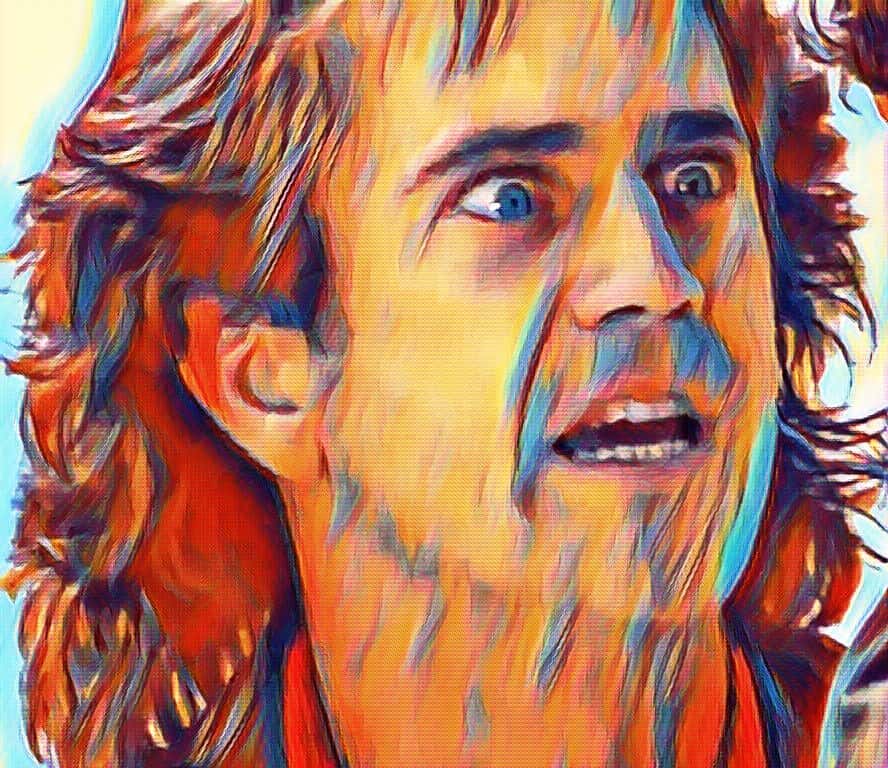
Mel Gibson for Dummies: Hollywood Hunk Becomes Infamous Film Icon
What do you get by taking a kid from New York, dropping him Down Under, and letting him loose on the streets of Hollywood? You get Mel Gibson – a man who managed to convince the world he could win an Oscar for screaming “FREEDOM!” in a kilt. But isn’t that the madness of Hollywood magic?
Early Years: From Peekskill to Sydney
Born in Peekskill, New York, on January 3, 1956, Gibson began the first of life’s big adventures when he was just 12 years old – involuntarily, of course, not of his own accord – when the family determined Sydney, Australia, promised more than small-town America. Try to picture this: An American preteen abruptly uprooted and dropped in the land of Vegemite and cricket, where everyone most likely spoke upside down too. Nobody could have believed this cross-ocean swap would spawn one of the most riotously over-the-top action heroes in film.
Youthful Mel sat in front of the National Institute of Dramatic Art, no doubt wondering whether all this Shakespeare with an Australian accent would eventually pay off the mortgage. The answer came speeding down a post-apocalyptic road in the form of leather-clad avenging angel Max Rockatansky.
The Mad Max Era: The Action Icon Emerges
When audiences first beheld the strange and wondrous spectacle of a previously unknown actor turning smashed automobiles into cinematic works of art in 1979, Gibson didn’t merely drive through the Australian wastelands – he became the car, tearing across the flat landscape with the frenzy of a cabled dingo with suicidal instincts. The Mad Max films of 1979–1985 didn’t merely turn Gibson into a star; they made him the patron saint of car anarchism and post-nuclear cool.
Yet the trouble with Hollywood success is that one iconic character is apparently never enough. Why settle for one quintessential role when you can have another?
Inner-City Killers: The Art of Managed Violence
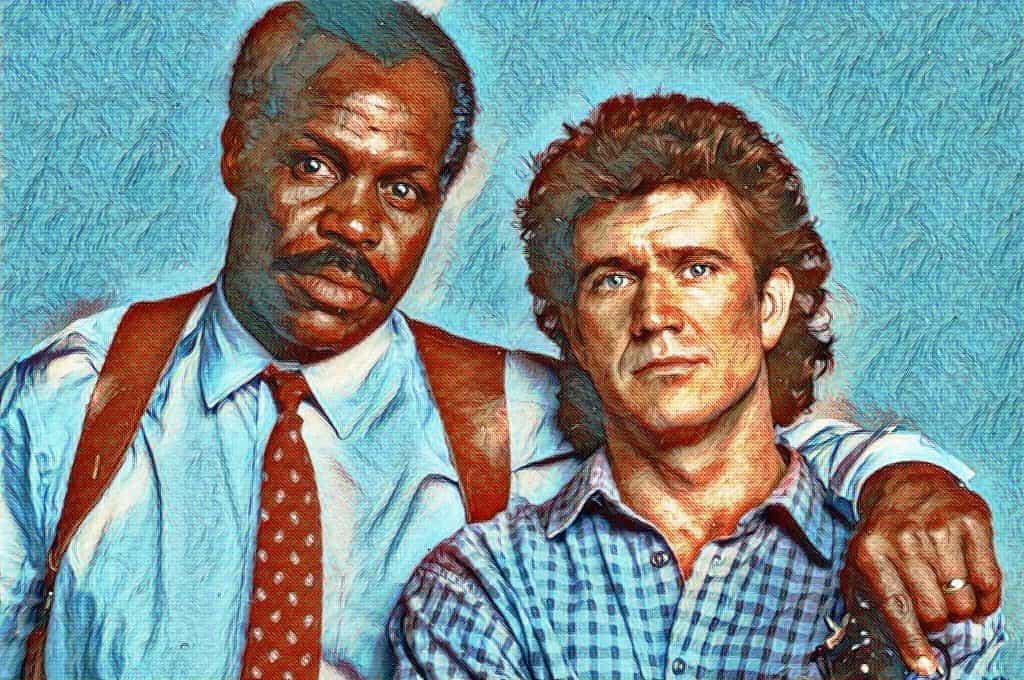
By the tail end of the 1980s, we were being treated to the Lethal Weapon movies, where Gibson honed the character of Martin Riggs – a cop so spectacularly unhinged that insanity wasn’t so much a character trait as a job requirement. Across four films, Danny Glover repeatedly informed him that he was “too old for this,” while Gibson honed the line into something approaching a minor branch of Method acting.
What’s remarkable about the partnership is the balance: Glover as the voice of reason, Gibson as the personification of sheer, unadulterated madness. You’re essentially watching a philosophical debate about sanity and beautiful insanity, except someone has replaced the philosophy department with explosions, car chases, and several hundred pounds of pyrotechnics.
Braveheart: The Kilt That Won Hollywood
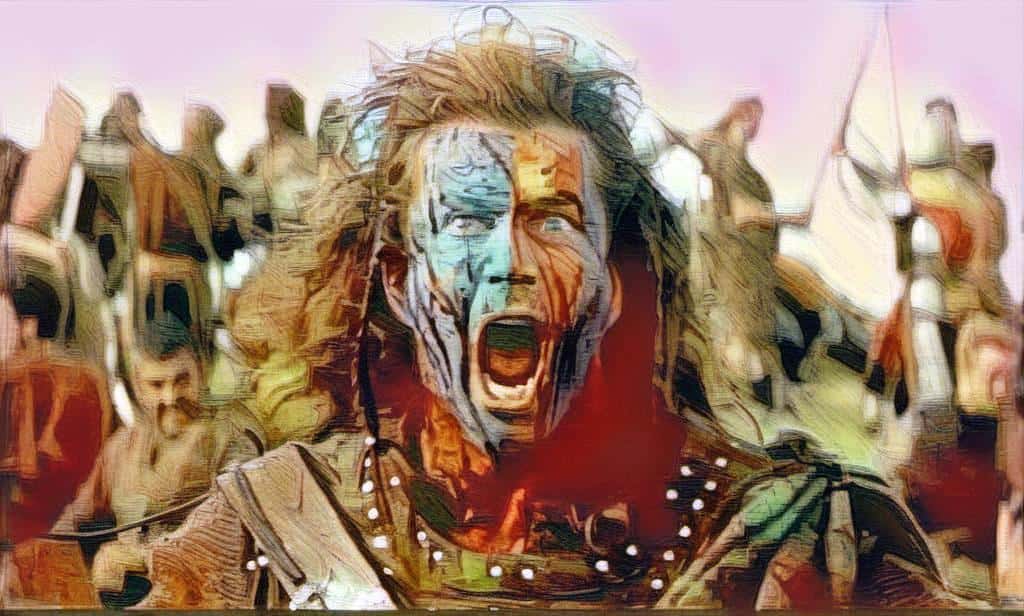
Then came 1995, and Gibson relaxed and thought to himself: “You know what this career could use? A few more kilts and thirteenth-century fight scenes.” And so came Braveheart- – a film in which Gibson starred, but of course also produced and directed, because apparently monopolizing the whole process of making adult men sob over the freedom of the Scots was where he perfected the art of getting hired for things.
The film swept the Oscars and captured the Golden Globe and Academy Award for Best Director for Gibson and the most prized Best Picture Oscar. Not bad for a war-painted warrior who wields a claymore and grimly slaughters Scottish history.
The Scandal Years: Religion, Scandal, and Box Office Hits
Gibson’s directorial track took a bizarre turn with The Passion of the Christ (2004), proving he could also ignite scandal as well as ring on the box office bell. He followed the biblical epic with returning the people back to ancient Mesoamerica in Apocalypto (2006), because nothing says “career diversification” like making people have to read subtitles and run around jungles and obsidian-sharpened darts.
But here’s where things get interesting and complicated with Gibson: personal scandals spawned a Hollywood exile of longer duration than some ancient civilizations, causing fans to wonder if the world would ever see him again working behind the camera.
The Redemption: Hacksaw Ridge and Redemption
Back from the wilderness after all those years, Gibson returned to the director’s chair with Hacksaw Ridge (2016). With two Oscars already in the bag, he reminded us that the greatest comebacks apparently involve conscientious objection, gut-level World War II combat scenes, and a director who seems to be thinking, essentially, “You want to see me back on my A-game? Watch this.”
The Gibson Heritage: Passion, Controversy, and Movie Magic
So what could Mel Gibson’s roller-coaster life possibly have in store for us? Perhaps this: in Tinseltown, scandal and genius frequently tango like old lovers who simply can’t bring themselves to break up. From the highways of Australia to the battlefields of Scotland and the landscapes of myth, Gibson has spent decades demonstrating that with sufficient passion, a few well-timed bellows, and a genius-level talent for turning any era into raw cinematic alchemy, you can survive almost anything – yourself first and foremost.
And isn’t it remarkable how the life of an American city kid, born in the Big Apple before becoming an OC transplant and eventually a Hollywood icon, so perfectly distils the madness of the entertainment business? In an industry built on fantasy, who better to flourish than a man who believes so completely in the illusion that sometimes it’s difficult to tell where the actor stops and the man begins?
How Mel Gibson’s Kin Discovered and Controlled Relocation Worldwide
A Saint-Sized Naming Convention
Just imagine it: a baby in Peekskill, New York, who will one day become one of the most divisive men in Hollywood. But hold on – you’re not finished yet. This isn’t just any baby. This is Mel Columcille Gerard Gibson, destined to become the eleventh of twelve children. Because when you’re Irish Catholic, apparently you don’t simply have children; you build a small city and put a parish church in the middle.
Then there’s the middle name: Columcille. It sounds like the sort of thing you’d deliberately mispronounce while ordering something expensive in an Irish restaurant. “Waiter, I’ll have the shepherd’s pie and a generous portion of Columcille, please.” But little Mel was properly named after St. Mel of Ardagh, while his middle name also honours St. Columcille, one of Ireland’s patron saints. Because when you’re this Irish, apparently one patron saint isn’t enough. You want backup saints. Religious insurance, if you will.
The Cultural DNA Scramble
When it comes to Irish authenticity, Gibson’s family tree reads like a geography textbook having an identity crisis. His father, Hutton Gibson, was a writer – because apparently the family couldn’t settle for merely being dramatic in person – and his mother, Anne Patricia Reilly, was Irish-born, bringing a direct line to the Emerald Isle with her. But then the genealogy takes another turn.
His paternal grandfather, Eva Mylott, was born in Australia to Irish parents, adding another layer to the family’s already rather enthusiastic Irish-Australian credentials. The result is a cultural GPS that seems permanently stuck recalculating between Dublin and Sydney, with the occasional detour towards “somewhere with tolerable tea.”
And then the family history gets even stranger with the arrival of another grandfather, a millionaire American Southern tobacco tycoon. Because nothing says “unified family identity” quite like Irish Catholic heritage, Irish-Australian roots, and Southern tobacco money all sitting around the same family tree, presumably arguing over politics while someone in the background sings opera.
The Great Pacific Escape
But wait – there’s more family soap opera to follow. In 1968, when teenage Mel was twelve and probably honing his brooding look, dad Hutton was a courtroom winner. He received $145,000 in a suit against the New York Central Railroad for a work-related injury (that’s more than a million dollars today for those currently plotting their own escape route).
Did he buy real estate? A sensible sedan? Not on your life. Rather, he came up with the most complex family move of modern times and packed all eleven Gibson spawn like a vagrant circus with the Ringling Brothers and moved the whole genetic circus to West Pymble, Sydney, Australia. Why Australia? Because it had twin aims within the sprawling Gibson family: showing respect to grandma Eva’s homeland and – to use a master chess strategy – getting the oldest son to sidestep the Vietnam War draft altogether. What better example of thinking ahead than moving the whole line of descendants halfway across the Pacific in order to sidestep the draft? That’s chess on the world stage, except the pieces are kids and the chessboard is transcontinental.
The Learning Finale
Once firmly established Down Under, young Mel ended up in St Leo’s Catholic College, Wahroonga, the culmination of the educational work of the Congregation of Christian Brothers. It appeared that after going half way across the world, evading the draft, and putting together the most cosmopolitan family group the world has seen, the Gibsons were not yet done filling out their quota of responsibility to Irish Catholic traditions of education. And there you have it- – the build-up of a Hollywood legend, with global tension, calculated moves, and one heck of a collection of Irish Catholic in-jokes in one film.
From Mad Max to Masterpiece: Mel Blunders Into Directorial Brilliance
The Twist That Nobody Expected
Just picture it: You’re one of those Aussie hard-men who struts into Hollywood, loaded with leather-assaultpants and a muscle car, and by morning everyone’s yelling you’re the next Steve McQueen. Most actors would ride that wave right to the bank, possibly sign on for a coupla more sequels, and spend their retirements surfing on the interest rates alone. But Mel Gibson? He literally looked at his hard-man image and said, “This is cute, but now picture me in tears over Scottish independence instead?”
Instead of simply letting Superman save the day, Gibson seemed to prefer spending his time behind the camera, providing direction for Clark Kent and everyone else. His evolution from leather-clad road warrior to Oscar-winning director is less a career progression than one man taking Hollywood’s script, throwing it out the window, and somehow achieving enormous success anyway.
The “How Hard Could It Be?” Stage
Gibson’s first experience in the director’s chair came in 1993 with The Man Without a Face. After years of watching other people run soundstages, he could presumably see himself there already: coffee in hand, making grand gestures and barking instructions while thinking, “I’ve watched people yell ‘action’ for years – how hard can this be?”
As it turned out, it was more complicated than you might imagine. But Gibson tackled filmmaking much as he had tackled not blowing the heck up in Lethal Weapon: with unexpected confidence and a strange gift for making the difficult look effortless. The film performed respectably, proving that our favourite tough guy could handle a quieter drama without requiring an explosion every twelve minutes and still look cool doing it.
The History Lesson That Turned Everything Around
Then came 1995 and Braveheart, the movie that somehow persuaded millions of people that medieval Scottish warriors went into battle wearing blue face paint as though they were heading to the most violent football match in history. Historically accurate? About as realistic as a medieval McDonald’s. Cinematically inspiring? Iconic to the nth degree.
Gibson didn’t merely direct the saga; he starred in it, produced it, and presumably personally inspected every sword before allowing it on camera. The 1996 Academy Awards consequently became something of a Gibson victory parade: five Oscars, including Best Picture and Best Director. The man who had already played a road warrior and a cop with anger-management issues had now demonstrated that the best way to conquer Hollywood was apparently to direct an imaginary Scottish army while screaming about freedom.
Spiritual Enlightenment That Shocked Everybody
Just when one thought one knew Gibson, 2004 had other plans. The Passion of the Christ came to theaters in a blinding flash of religious fervor, grossing over $600 million worldwide and proving to the world that the actor who’d spent decades portraying a detective with a death wish could deliver one of the most spiritually-fueled film experiences in modern history.
What Gibson used to do so assuredly in the direction of pyrotechnics has graduated into leaving middle-aged men questioning the heck if there even were people in a film. Reviewers could not decide if they were to pan the film or recommend therapy sessions. Film-making as religious experience was the aftermath of a director who had already made headlines for innovative methods of getting rid of undesirable people.
The “Let’s Make This Really Interesting” Masterpiece
Yet Gibson’s most irresponsible direction came with Apocalypto in 2006. Try to imagine the elevator pitch: “I want to do a running picture in pre-Columbian America with no known stars, subtitles throughout, and maximum ancient Mayan civilization so archaeologists will weep tears of joy.” Any sane studio head would have had him escorted from the premises in handcuffs. He succeeded despite creating a gut-response masterpiece that demonstrated dialogue isn’t necessary when you know the strength of visual storytelling. Critics loved the tech know-how and viewers discovered you could be completely entranced by a movie in which not a single word could you understand. It was as if watching a master play the game of moviemaking at an expert level – and winning.
The Transformation Finished What’s Remarkable
It’s not so much the quality of the films as the sheer scale of the thinking behind them. Gibson tackles enormous, high-concept premises with the same fervour he once brought to car crashes and shootouts. The difference? This time, he’s the one dreaming up the destruction rather than merely surviving it.
From action hero to director, Gibson recast himself as something Hollywood isn’t usually prone to producing: a filmmaker unafraid to tackle sensitive subject matter, ancient civilisations, and metaphysical questions with equal fervour. It was such an unexpected and successful career realignment that you can’t help wondering what other action heroes might be hiding a directorial talent. Although, naturally, most of them are probably hiding more action movies.
The Mel Gibson Years: From Drama Queen in Tutus to Hollywood’s Most Mysterious Anti-Hero
Fairy Queen Origins Nobody Saw Coming
Picture this: it’s 1975, and inside a Sydney drama school, a future action hero named Mel Gibson is standing en pointe in a tutu as Titania, the fairy queen in A Midsummer Night’s Dream. Yes, the same man who would later snarl “I am Mad Max” once danced en pointe as a fairy queen. If that doesn’t make you question everything you thought you knew about the testosterone-fuelled path to Hollywood stardom, nothing will.
And the delicious irony doesn’t stop there. Gibson and future Best Actress contender Judy Davis were star-crossed lovers at the National Institute of Dramatic Art, performing Romeo and Juliet together. We can only imagine the universe’s sense of humour as Gibson practised romantic sonnets, blissfully unaware of the bomb-ridden future awaiting him and apparently unconcerned with the finer points of iambic pentameter.
The $9,000 Road Warrior Package
Once he graduated in 1977, Gibson dove headfirst into Mad Max – and by “dove headfirst,” I mean he was paid a grand total of $9,000 to become Australia’s most recognizable post-apocalyptic road warrior. To put that into perspective, it’s roughly what some people might spend on a reasonably nice used car today. While Gibson was helping launch an entire film genre, he was doing it on something approaching the budget of a Honda Civic.
But there’s the sweet irony: success hadn’t exactly domesticated the road warrior. Gibson moved into a $30-a-week Adelaide flat with his bride-to-be, Robyn Moore. Thirty dollars a week. Less than what some of us now spend on breakfast and a coffee. The poetic justice is almost too good – the man whose future paycheques would be measured in figures approaching $25 million once shared rent for less than the price of a decent meal.
The Chameleon Years: From Village Idiot to Naval Officer
Gibson’s early career is a lesson in “fake it till you make it.” He grew from a retarded teenager in Tim to a naval lieutenant on The Sullivans, a sign that range isn’t something you create. The man accumulated roles as a completionist – he had to do ’em all, even if one is for a lost prison serial called Punishment which no one ever saw.
This ragtag strategy wasn’t just bold; it had sounded extremely shrewd. Gibson was building an acting resume that would serve him well when Hollywood came knocking.
American Invasion: Feeding the Road to Success
Hollywood came knocking in the form of The River, where he and Sissy Spacek played one of the Tennessee farm strugglers. Because, seemingly, the American film formula for success is to pretend you understand farmyard economics. But Gibson hadn’t got the cylinders fully firing yet.
And then came 1987, and Lethal Weapon, the film that made Gibson more than just an upstart newcomer, but bona fide movie star, Hollywood’s dealer of choice in controlled chaos. Martin Riggs was a seismic event more than a film character. Gibson had hit a sweet spot – that nice juncture of “I’m too old for this” and “here I go leaping off this roof anyway.”
The Golden Nineties: Scottish Voices and Colonial Empire-Building
The ‘90s were Gibson’s imperious decade, as the actor shuttled between commercial hits and personal obsessions like a Hollywood DJ mixes personal favorites with left-field deep cuts. He voiced John Smith in Pocahontas (what better way to describe colonial expansion than in an Australian drawl?), parodied a supposed Scottish brogue in Braveheart, and collected a then-record $25 million for The Patriot.
This decade placed Gibson in his most powerful forms: director, star, and cultural phenomenon in one undeniable package.
The Fall: When the Music Stopped
This is where our story takes a turn that even the most crazed scriptwriters in Hollywood couldn’t have conceived. Sometimes the most fascinating thing about any scandal is not the rise – but the fall, as the irresistible power of gravity reasserts itself. Gibson’s later years were a lesson about the transitory nature of reputation, showing that your Hollywood image is more delicate than a soap bubble in a raging storm. Scandalous remarks and on-streets tantrums made Gibson from everyone’s darling into a studio pariah quicker than you can say “career suicide.”
The Villain Years: Hollywood’s Most Candid Career Detour
But Gibson continues to resurface in front of us as the only friend who continues to attend parties even after he was “banned” from the past three. He’s created a second profession as the villain-for-hire of Hollywood with movies such as Machete Kills and The Expendables 3. Is this the pinnacle of Tinseltown career makeovers, or the most complex method acting exercise to ever go into production? Either way, Gibson has managed to take real-life scandal and turn it into real-life on-screen drama. That’s it? That’s taking a boxful of lemons and making serious box office lemonade!
The Mel Gibson Directing Saga: An Exploration of the Most Fascinating Enigma in Hollywood
The Reluctant Director
Just imagine: 1989 comes along and film producers largely are down on bended knee in supplication to Mel Gibson and see if he can and would want to direct. He says? A curt “thanks, but no thanks” because nothing says the next Academy Award winner like flatly turning down the one thing you’ll become a household name for, right? It’s like turning down the winning lottery ticket because you don’t want to deal with the ramifications of all the money.
Skip ahead to 1993 and our reluctant protagonist cracks under the strain and becomes the director of one film in The Man Without a Face. Two years down the line, he’s hoisting up the Oscar for Braveheart and no doubt thinking he wished he had done this sooner and become a director of men who love to tell other people where to stand and how to feel.
The Project That Got Away (And Other Hollywood Flops)
Gibson also grandly plotted to re-create Fahrenheit 451 – yes, that bright little story of books on the bonfire. But in 1999, dates clashed like an aggrieved studio mogul, and the film went into development hell. Meanwhile, he would direct Robert Downey Jr. in a stage production of Hamlet. What could possibly go wrong with that combination? Well, as you could probably guess, a tonne of things. The backslide into drug-use by Mr. Downey derailed the project sooner than you could say “To be or not to be. Probably not to be right now.”
The Passion Play
In 2002, Gibson laid down the acting mantle and took up directing once more What’s next? A project constructed under the radar, a little film called The Passion in Latin and Aramaic with no subtitles, because seemingly Gibson had faith in the universal language of suffering. The man wanted to “transcend language barriers for filmic storytelling” – or in Hollywood speak, “let’s see if people are going to watch a motion picture where they have no idea of what the hell’s going on.”
Plot twist: they absolutely would. The Passion of the Christ capitalized on every R-rated movie of all time, earning more than $370 million in US box office. No one would’ve thought unintelligible language would be a box office hit.
The Ancient World Tour
Gibson appeared to have a weakness for historical epics in which actors used dead languages. After The Passion, he treated us to Apocalypto in 2006 – a film in which one could lose the sound of the actors’ voices but never the spectacle. Gibson had discovered that subtitles are his trump card, and film audiences were reluctant experts in ancient history.
The Viking That Never Was
What’s Gibson’s next blockbuster? A Viking epic with Leonardo DiCaprio, of course with lines in languages of the times because who wants to mess with tradition? But Leo had already had one lifetime of inaudible lines and had no share of those either. The film, in a working title of Berserker, still lingers in the mythical Hollywood realm where fantasies are left to wait forever.
The Maccabees Mish
Gibson brought in Joe Eszterhas in 2011 to write a film about the Maccabees. What ensued was a Hollywood soap opera more gripping than most real movies. Eszterhas accused Gibson of usurping their project and wrote an incensed open letter slinging more mud than a broken washer could contain. Gibson’s reaction? The script had initially been poor to begin with. Eszterhas then accused Gibson of covertly recording the actor’s supposed rants. At this point, the film about the Maccabees had spawned more scandal than most movies garner in profits.
The Resurrection Business
In 2016, Gibson announced plans for The Passion of the Christ: Resurrection, once more with Braveheart screenwriter Randall Wallace. Because what are you actually doing with a sequel to a polarizing religious epic besides going the whole nine yards? The film has lingered “three years off” for maybe seven years now, and in Hollywood-time, this makes it more or less greenlit and ready to go.
War Stories and Remakes
One not to stick around in the limelight of scandal (or accolades), Gibson has promised to direct Destroyer, yet another WWII film/flyboy action of the USS Laffey repelling 22 kamikaze pilots. He’s equally promised to remake The Wild Bunch and direct Lethal Weapon 5, retirement apparently not in Gibson’s lexicon.
The Gibson Method
What’s motivating Gibson as a director? According to accounts from people who’ve worked with him, he’d prefer to release tension on-set by having actors do dramatic scenes with red clown noses on. Helena Bonham Carter nicely described his sense of humor as “lavatorial and not very sophisticated.” Easter eggs are also a thing Gibson enjoys, having included one frame of himself smoking in one of the Apocalypto trailers – because nothing shouts “ancient Mayan culture” like a guy smoking a cigarette.
The Ruling
Love him or loathe him, Gibson has forged a personal niche in Hollywood: the director who keeps you on the mental treadmill. Whether he has you deciphering Latin subtitles or running for cover to fend off kamikaze aircraft, one thing’s for sure – you’re on the edge of your seat with a Mel Gibson film. In a world where safety first is the movie mantra, maybe this is the very formula required: a director who never looks back on putting audiences in the position of thinking, flinching, and often rubbing their eyes in disbelief.
Mel Gibson Directing: A History of Holy Warriors, Viking Aspirations, and Red Clown Noses
The Reluctant Genius Who Wrote “Thanks, But No Thanks”
Can you imagine? It’s 1989, and film moguls are nearly genuflecting to Robert Downey Jr., begging the actor to try to convince his pal Mel Gibson to give directing a shot. Gibson’s response? A polite but firm “Thanks, but no thanks.” Fast-forward a few years, and look! Everybody’s calling him “Oscar winner Mel Gibson.”
Irony of fate, isn’t it? The greatest directors are often those who need to be dragged kicking and screaming into the presence of the camera. One of those people who’ll turn down a winning lottery ticket but still complain about the nine-to-five
The Accidental Auteur Finds His Calling
Gibson eventually relented in 1993 with The Man Without a Face – since clearly, when Hollywood knocks and knocks and keeps on knocking, even the thickest door creaks open eventually. Braveheart, however, turned the unwilling viewer into a film dynamo and earned the reluctant director the coveted Academy Award for Best Director.
Pretty good for the person who initially rejected the position, though? It’s as if the person unwittingly discovers their profession by accident in the act of trying to get out of it. The cosmos has a funny sense of humor occasionally.
When Drawings Go Up in Smoke
That’s where the story of Gibson becomes richly complex: he had bigger plans to re-make Fahrenheit 451, but in 1999, schedule conflicts burst that bubble quicker than Bradbury’s repressed books. And who can forget the cult example of Gibson directing Robert Downey Jr. in Hamlet?
Well, fate had other plans in January 2001, and Downey’s personal demons had other ideas about that shoot. Sometimes the most poetic of projects are ruined by the most prosaic facts.
The Passion Project That Would Not Make Sense
In 2002, Gibson announced he would quit acting to direct full-time. His grand entrance? Some humble little film titled The Passion – in the old local and dead Roman tongues, no subtitles. Because who needs to hear lines when you’ve got “pure filmic storytelling,” eh?
Well, subtitle sanity prevailed, and The Passion of the Christ went on to actually finish as the then-highest-grossing R-rated film, at more than $370 million. Not bad for a guy who didn’t even want to direct anything. It’s like watching someone stumble into lighting a fire by not wanting to get burned.
The Viking Dream That Set Sail
And who would forget Gibson’s Holy Grail: a Viking epic featuring Leonardo DiCaprio? Try picturing this – actual ancient slang, fatal Nordic battles, and Leo most likely sporting yet another epic beard. Sounds epic, huh?
Well, DiCaprio left it faster than a Viking running away from a well-guarded monastery. But did Gibson concede? Of course not! In 2012, he announced Berserker would keep going into production. Because nothing shouts dedication more loudly than the fervor of hanging on to a film once your A-list lead has moved on to greener pastures.
The Maccabees Mess: When Collaboration Goes Nuclear
Gibson hired Joe Eszterhas to write a Maccabees film in 2011. What could go wrong? Everything, as it would turn out. In April of 2012, Eszterhas was writing indignant letters accusing Gibson of ruining their screenplay, with accounts of so-called secretly recorded “hateful rants.”
Gibson’s response? Essentially, “Your script stinks, and I’m making this movie anyway.” He made comparisons between the Maccabees saga and the American Old West, because apparently, ancient Jewish rebellion and cowboys have more in common with each other than you’d realize. Sometimes creative partnerships end in a bang bigger than the story they are attempting to tell.
The Resurrection of Ambitious Storytelling
In 2016, Gibson announced The Passion of the Christ: Resurrection – because why not? If possible, why not reissue? He estimated the film would take three years because “it’s a big subject.” Well, Mel, stories of resurrection don’t happen every day, do they? The film seemingly went into production in the month of January 2023, with film critic Matt Zoller Seitz proclaiming Gibson “the preeminent religious filmmaker in the United States.” Not bad for the director who began with tentative directing cues by Robert Downey Jr. Sometimes the biggest things have the most unusual of beginnings.
War Stories and Hollywood Mad Libs
Gibson’s World War movie obsession transferred to Destroyer, another WWII Pacific Theater story of the USS Laffey crew fighting off 22 kamikazes. Clearly, neither World War II movie about the battle of Okinawa was sufficient in feeding his appetite for war drama.
And then there’s the remake of The Wild Bunch, with Michael Fassbender, Jamie Foxx, and Peter Dinklage potentially starring. Jerry Bruckheimer producing, Warner Bros. backing – it’s like a game of Hollywood Mad Libs, except with actual money at stake. Somehow, the most unlikely combinations are often the ones that produce the most intriguing possibilities.
The Person Behind the Red Clown Nose
What motivates Gibson as a director? His inspirations include George Miller, Peter Weir, and Richard Donner, but what he seems to have taken from them is less a specific style than a devotion to the craft. And then there’s the tasty paradox: Gibson has a habit of diffusing dramatic tension on set by having actors perform intense scenes while wearing red clown noses.
Helena Bonham Carter once summed up his sense of humour rather perfectly: “He has a very simple sense of humour. A little lavatorial and not very high-brow.” And Gibson has apparently never seen a contradiction he couldn’t make entertaining. He even featured himself taking a fag break in the Apocalypto teaser trailer. Because why wouldn’t you? You’re making an ancient epic about the Maya, so naturally there’s room for the director to stop for a quick smoke.
The Beautifully Contradictory Journey
Red-nose comedian, Oscar-winning actor, and reluctant director, Mel Gibson’s filmography exists in defiance of virtually every Hollywood how-to book ever written. He has made ancient-world epics, religious blockbusters, and brutal war films, all while seeming to operate according to his own peculiar set of filmmaking rules.
The man who once seemed content simply to cling to the bonnet of an exploding car became one of Hollywood’s most ambitious directors, tackling religion, history, violence, and human sacrifice on a scale few filmmakers would dare attempt. And yet the same director can puncture all that dramatic grandeur with a bathroom joke and a ninja-like cameo for a quick puff.
Perhaps that’s the real Gibson paradox: sometimes the most improbable routes lead to the most astonishing destinations. And occasionally, the man taking you there is wearing a red clown nose.
Mel Gibson’s Love Ride: A Chronology of Passion, Heartbreak, and Courtroom Battles
Ever feel like your love life has been picked apart by tabloid writers with the precision of forensic pathologists? Try Mel Gibson – though he’ll likely complain about “freedom” and slowly limp off in slow motion in the manner of a dramatic escape sequence.
Mad Max: A Love Story Begins (1977-2011) and the Dental Assistant
Imagine this scenario: It’s 1977 and John Travolta is teaching the masses the way of disco, and on one of the streets in Adelaide, Australia, budding actor Mel Gibson encounters Robyn Denise Moore, a dental nurse. She’s perhaps thinking, “Nice teeth – clearly he flosses,” and he’s thinking, “This woman can deal with my special brand of crazy.” Three years go by – boom! – Catholic wedding bells are ringing in Forestville, uniting for life to bear more young’uns than an Animal Planet special.
What ensues is a suburban fairytale penned by someone who apparently never heard of the existence of birth control: seven kids in the course of almost two decades. Hannah enters the picture in 1980, and in 1982, the twins Edward and Christian are born (because why settle for one restless night when you can have two?), then William, Louis, Milo, and finally Thomas in 1999. Gibson’s home at this juncture had to look like nothing so much as a daycare center conceived by someone with serious commitment issues.
This was Hollywood’s strongest marriage for 26 years – a unicorn in a world where engagements barely last longer than the milk in your fridge. Robyn steadied Gibson as he tore through Hollywood one heart-stopping action sequence after another. Robyn observed Gibson transform from anonymous Aussie actor to directing Oscar winner, probably wondering if she had married Clark Kent or maybe unwittingly slept with Kent’s deranged alternate personality.
And then July 29, 2006 – the day after Mel’s infamous drink driving bust in Malibu, where he had the audacity to spout anti-Semitic remarks that would make a medieval serf turn pale. Robyn’s filing for divorce ensued. Chance? Gibson himself confesses not. Life has a way of delivering our plot twists with the subtlety of a wrecking ball, doesn’t it?
The divorce lawsuit lingered on like a tax attorney’s version of a Shakespearean tragedy. In 2011, the bill exceeded more than $400 million – a handful of small countries’ annual GDP. Not a single prenup, no California community property statutes, and the marriage at the height of his earnings years. That’s the deal when contracts are similar to movie scripts: voluntary reading material that becomes terribly costly.
Russian Interlude: Poetry, Passion, and Restraining Orders (2008-2011)
Come on stage left Russian pianist and lyricist Oksana Grigorieva with a melodrama the equal of a Dostoyevsky heroine. In her account, Gibson courted her with verse – “edgy, modern iambic pentameter.” Because there’s nothing like being wooed in high-brow verse by the fellow whose last romantic overture had more likely been grunting approval over the dinner table.
Just picture this affair: A Hollywood actor, shaken by a contentious divorce, dating a classical singer with what must have seemed like a befuddled Shakespeare struggling with the meaning of life. Did she swoon with each line, or was she simply impressed he knew what iambic pentameter is?
Their little one Lucia was born in October 2009, but by April 2010, the love had escalated into a litigators’ soap opera that would bring John Grisham tears of jealousy. Restraining orders flew back and forth like missives between warring states. Audio tapes emerged with Gibson dishing out cuss-word-laden diatribes that would have a sailor calling for subtitles.
In a single stroke, the talent reps dumped clients, the movie studios terminated contracts, and Gibson stood in a courtroom making a plea of no contest to the misdemeanor offense of battery. His rationale? A “terribly awful moment in time” at “the height of a breakdown.” We’ve all had relationship breakdowns, but who among us requires TMZ headlines and payout settlements to escape romantic catastrophes?
Settlement in 2011: $750,000, shared custody, and a house in Sherman Oaks until the age of 18 for Lucia. Not the rom-com the world had in mind but maybe the ending everyone so hoped for.
The Horse Riding Author: Third Time’s the Charm? (2014-Present)
By 2014, Gibson had fallen in love once more – this time with Rosalind Ross, the former champion equestrian vaulter turned screenwriter. Finally, someone who could coexist in body and mind with a personal and professional wild ride. Ross had the particular skills one had to possess in order to date Mel Gibson: athleticism, creativity, and probably the emotional maturity of a person capable of riding thousand-pound creatures.
Their difference in ages raised eyebrows though – Gibson, 60, and Ross, 26 – but Hollywood has long played by different mathematical principles when dealing with love stories. While other mortals would disapprove of such matches, Hollywood winks and pours bubbly champagne. Ross welcomed Lars Gerard in January of 2017, Gibson’s ninth child. At this point, one wonders if Mel took franchising his children’s play center complex into consideration. Nine kids in almost four decades places Gibson on the brink of having spent more time in his life changing diapers than some individuals have spent on the planet earth. He should win a parental lifetime achievement award.
Philosophical Implications: What Love Has to Offer
What deep insights can we glean from Gibson’s love life timeline? That Hollywood romance obeys the laws of physics unknown to mortal men? That one can’t buy happiness but will gladly pay for famously costly despair? That even the Mad Max of the world can’t deal with the cosmic tumult of modern romance?
Consider this: Gibson’s love affair has created more onscreen plot turns than the rest of his body of work combined. Each relationship came with different lessons – security and faithfulness with Robyn, passion and destructiveness with Oksana, and perhaps, wisdom and balance with Ross. His love affairs are a master class in human psychology with case studies in commitment, infidelity, redemption, and the ultimate hope that this time things will be different. Gibson’s narrative teaches us something that is universal about ourselves: our ability to re-invent ourselves, our hunger for love and intimacy, and our survival of epic personal failures. He’s instructed us that celebrity serves to reveal both our virtues and our vices and transforms personal ailments into public exhibitions that somehow echo our shared fascination with love’s epic catastrophes. This much is certain: Gibson’s love story continues to unfold one gripping chapter after another. As with the movies he produces, this one has no assured, feel-good ending – only the gritty, grimy, hilariously complicated journey of finding love with the whole world in his viewing audience.